How to Choose a Knife That Will Actually Last (And Avoid the Junk)
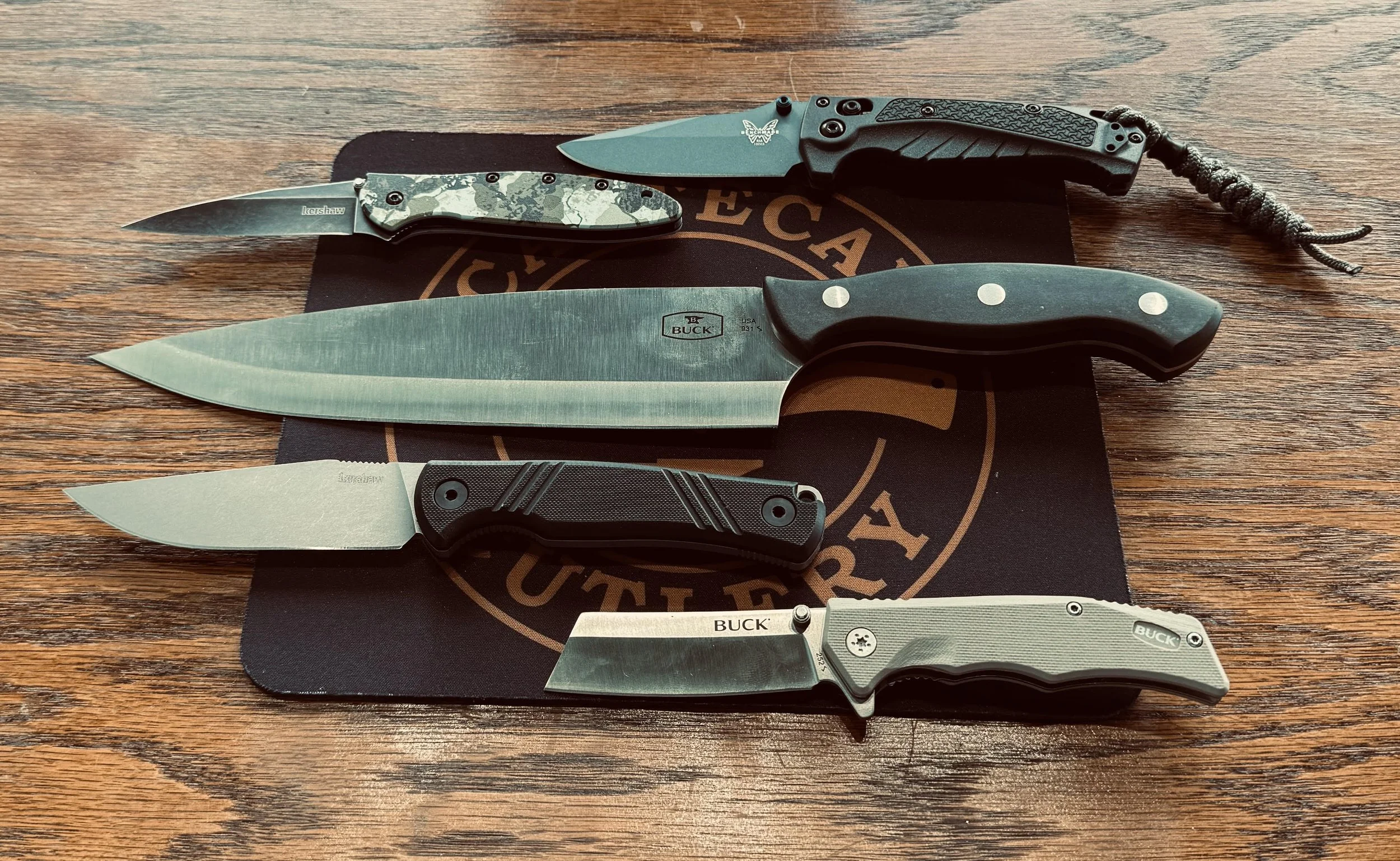
A selection of knives available at Cartecay Cutlery in Ellijay, GA.
Most people buy knives the wrong way.
They see something that looks cool, glance at the price tag, and assume expensive means better. Sometimes it does. A lot of times it doesn’t.
After sharpening and handling knives every day at Cartecay Cutlery, we see the same thing over and over again: people walk in with knives that looked great when they bought them, but turned out to be dull, poorly made, or just not built to last.
If you understand a few key things about knives, it becomes much easier to spot the good ones and avoid the junk.
Let’s break it down.
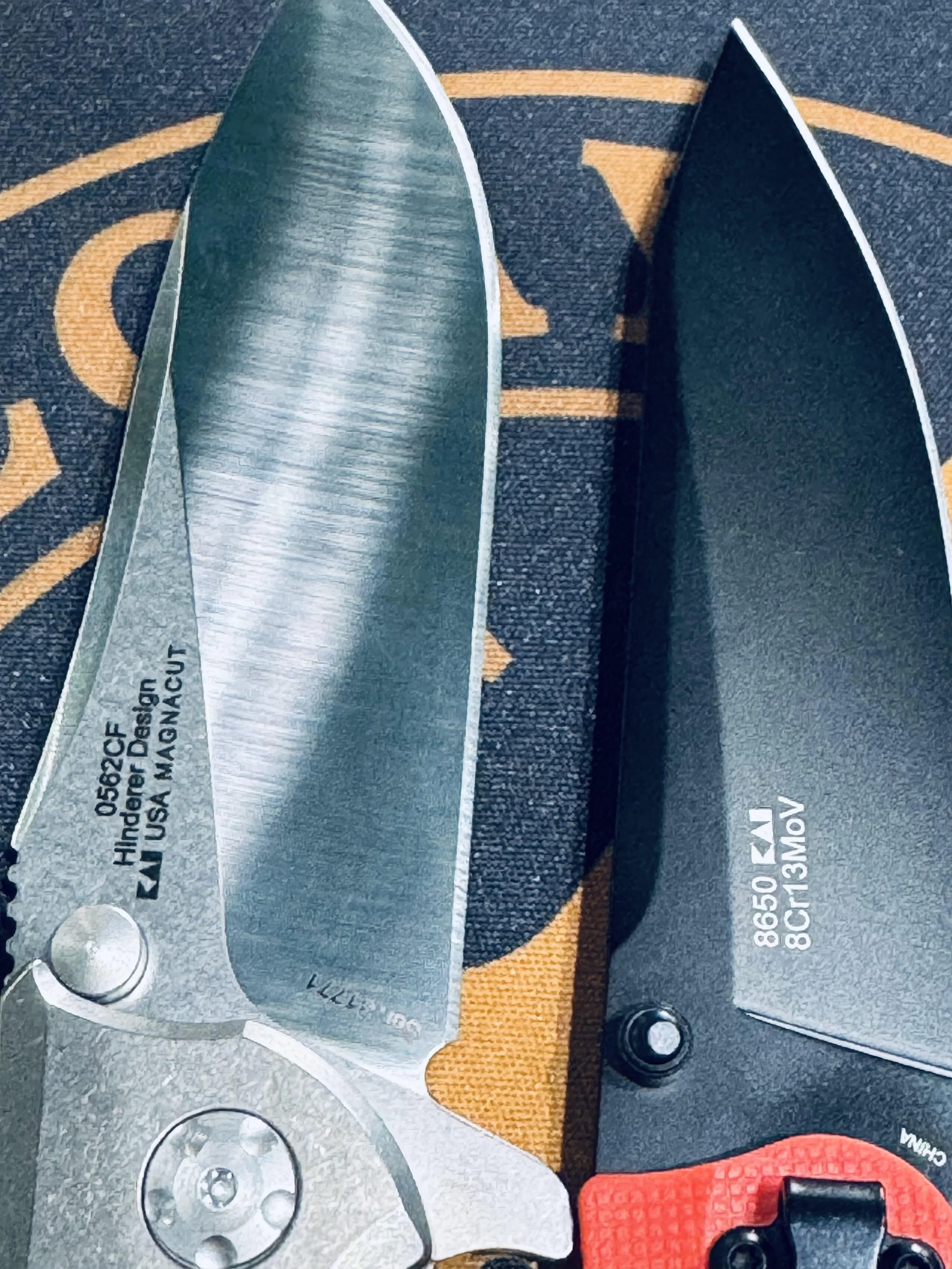
Premium Magnacut steel compared to budget 8Cr13MoV.
The Steel Matters More Than the Brand
The most important part of any knife is the steel used in the blade.
Different steels affect three things:
• How long the edge stays sharp
• How resistant the blade is to rust
• How tough the blade isA few examples you’ll see often:
Budget steels
Steels like 3Cr13MoV or 5Cr15MoV are very common in affordable knives. They’re easy to sharpen and reasonably corrosion resistant, but they usually won’t hold an edge as long as higher-end steels.
Mid-range steels
Steels like 14C28N or VG-10 are excellent all-around options. They offer a good balance of edge retention, corrosion resistance, and toughness.
Many of the best value knives on the market fall into this category.
Premium steels
Steels like S35VN or MagnaCut are designed to keep an edge for a long time while also resisting corrosion and chipping.
These steels cost more to manufacture and machine, which is why knives made with them tend to be more expensive.
But the steel name alone doesn’t tell the whole story.
Heat Treatment Is Just as Important
Two knives made with the same steel can perform completely differently depending on how the steel was heat treated.
Heat treatment determines how hard the steel becomes and how well it holds an edge.
A well heat-treated mid-range steel will often outperform a poorly heat-treated “premium” steel.
Unfortunately, this isn’t something you can easily see just by looking at the knife. That’s why reputation and testing matter.
Blade Geometry Matters More Than People Think
A knife doesn’t cut well just because it’s sharp.
The shape and thickness of the blade determine how easily it moves through material.
For example:
• Kitchen knives usually perform best when they are thinner behind the edge
• Outdoor knives may be thicker for durability
• Cleavers are thicker but have a thin cutting edgeA thick blade with poor geometry can feel dull even when freshly sharpened.
The Handle Should Actually Fit Your Hand
This is one of the most overlooked parts of a knife.
A knife can have great steel and still be miserable to use if the handle is uncomfortable or slippery.
Look for:
• Good grip texture
• Solid construction
• A shape that feels natural in your handIf a knife feels awkward after a few seconds, it probably won’t feel any better after ten minutes of use.
Marketing Doesn’t Always Equal Quality
There are a lot of buzzwords in the knife world.
Some are meaningful. Others are mostly marketing.
For example:
• Damascus can be beautiful, but it doesn’t automatically mean better performance.
• “Tactical” is usually just a style description.
• Coatings sometimes hide lower quality steels.That doesn’t mean those knives are bad. It just means it’s important to look past the marketing and focus on what actually affects performance.
How We Choose Knives for the Store
At Cartecay Cutlery, we try to focus on knives that are built to actually be used.
We look for:
• Reliable steels
• Solid heat treatment
• Good ergonomics
• Companies that stand behind their products
We also sharpen knives daily, which gives us a good idea of how different steels perform over time.
Some steels sharpen quickly but dull fast. Others take longer to sharpen but hold an edge much longer.
Seeing that firsthand helps us decide what we’re comfortable putting on the shelf.
Final Thoughts
A good knife doesn’t have to be the most expensive one on the shelf.
What matters is that it’s made with good materials, properly heat treated, and designed to actually cut well.
If you ever have questions about knives, sharpening, or maintenance, feel free to stop by the shop or reach out through our website.
We’re always happy to help people find something that works for them.
